ServicesCommercial Roofing
Commercial Roofing in Seal Beach, Handled by One Crew Start to Finish
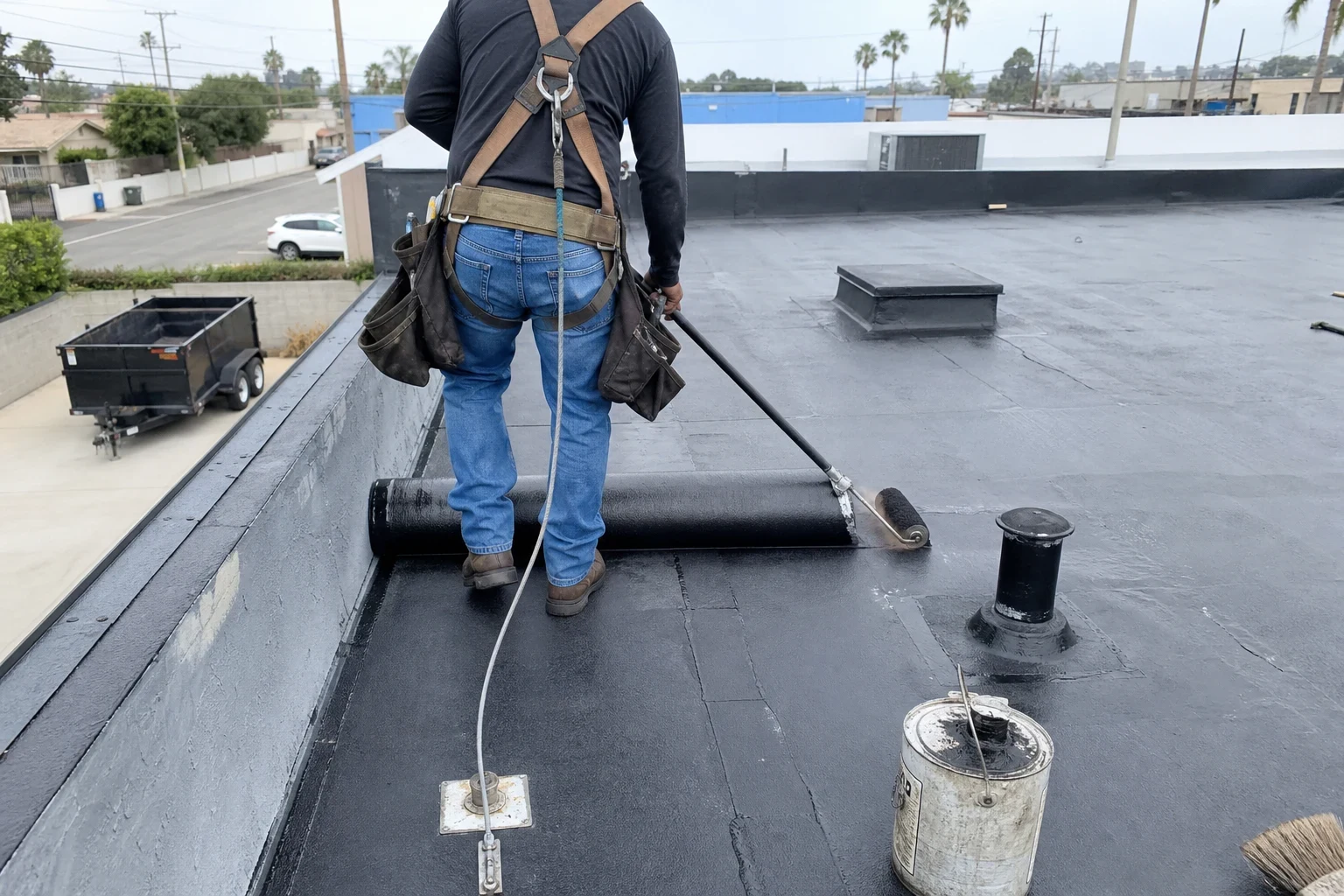
We repair and replace low-slope roofs on storefronts, offices and small commercial buildings. The people who measure your roof are the people who install it, so drains, curbs and parapet flashing get built the way they were planned, with your business still open below.
The Commercial Roofs We Work On
Around Seal Beach, most commercial buildings have low-slope roofs: single-ply TPO, modified bitumen, or an aging tar-and-gravel built-up system. They break down in ways a sloped roof does not. Water drains slowly, so a plugged drain, an opened seam or a split pitch pan at a gas line can leave water sitting on the membrane for days.
Our team is small, and the person who walks your roof and prices it remains on the job through tear-off, installation and the closing walk. On commercial roofs that counts, because leaks tend to begin where surfaces meet: parapet walls, HVAC curbs and scupper boxes. Getting those right takes someone who saw them before the old roof was removed.
We hold a California roofing license, CSLB 1092407 (C-39), and carry insurance. If part of your building has a steep slope, see our Roof Replacement and Flat Roofing pages for more on those systems.
What the Work Includes
Membrane repair and seam work
We heat-weld new TPO patches, or torch and cap modified bitumen, over split seams and punctures. Before any patch goes down, we probe the surrounding membrane to make sure the substrate is sound.
Full reroof or recover
Sometimes the existing roof can stay and take a new membrane over it. Sometimes wet insulation means a full tear-off. We core-cut the roof to tell which, and we show you the sample.
Drains, scuppers and crickets
Ponding water shortens a membrane's life. We clear and reset drain bowls, rebuild scupper boxes, and add tapered insulation or crickets behind curbs so water moves toward the outlets.
Penetrations and rooftop equipment
HVAC curbs, vent stacks, conduit and gas lines are where most commercial leaks begin. We reflash curbs, replace dried-out pitch pans and seal each penetration to the membrane manufacturer's detail.
Parapet and coping metal
Salt air eats exposed fasteners and thin coping. We replace corroded coping and counterflashing so water cannot get behind the membrane at the wall.
When a Commercial Roof Is Asking for Help
Puddles still there two days after rain
Lingering water usually means a low spot in the deck, a clogged drain or too little slope. It wears down the membrane and puts extra load on the structure.
Brown marks on ceiling tiles
A ring on a drop-ceiling tile tends to show up downhill from where water actually enters. We follow it back across the roof rather than guess.
Bubbles, ridges or separated laps
Blistering on modified bitumen or built-up roofs points to trapped moisture or a lost bond. On TPO, a lap that has opened lets water slip beneath the sheet.
Orange stains along walls
Rust running down parapets or near rooftop units shows the flashing metal is corroding and its fasteners are working loose.
Split sealant around curbs
Constant sun shrinks and cracks sealant. Once a gap opens, each storm runs water down the curb's side.
How a Commercial Job Runs
- 1
Roof walk and core samples
We inspect the whole roof, photograph the problem areas and cut cores where we suspect wet insulation. You get a free written estimate that lists each line item.
- 2
Planning around your business
We set work hours, staging and material drop-off with you. Noisy tear-off and any torch work can be scheduled for times that disturb tenants and customers least.
- 3
Permit and code
We pull the city permit for reroof work. California's Title 24 energy code can require a cool-roof rated surface on low-slope reroofs, and we build that into the scope from the start.
- 4
Install with the same crew
The crew that started the job finishes it. Each day ends with the roof sealed to weather and debris cleared from the ground.
- 5
Final walk and water test
We walk the finished roof with you, run water at the drains and point out what to watch for in coming seasons.
What Moves the Price
Commercial roof pricing comes down to what is under the membrane and how hard the roof is to reach. We cannot price a building honestly without walking it and cutting a core or two. Your written estimate shows each of these items separately, so nothing gets added later without a conversation.
- Recover or tear-off
- A recover over a dry, sound roof costs less than removing every layer. Wet insulation or more than one existing roof usually rules a recover out.
- Membrane type
- TPO, modified bitumen and built-up systems differ in material cost, labor and how they are installed. We explain the tradeoffs for your building.
- Penetrations and equipment
- Every curb, pipe and unit needs its own flashing. A roof crowded with HVAC equipment takes more labor than an open one.
- Drainage corrections
- Adding tapered insulation, crickets or new drains adds to the scope, though it often adds years to the membrane.
- Access and code
- Building height, crane or hoist needs, permit fees and any cool-roof requirement all factor into the total.
What Building Owners Ask Us
Something not covered here? (562) 373-6719
Do I have to close while the roof is being worked on?
Usually not. We open one section of the roof at a time and time the noisy or smelly steps around your business hours. Tenant access and parking get settled with you before work begins.
Is my low-slope roof worth repairing, or does it need replacing?
The answer comes from the age of the membrane and how much insulation has soaked up water. Dry cores and a contained problem mean a repair is sensible. If moisture runs through wide areas, a patch only seals it in, and we will say that directly.
Will you deal with my insurer on a commercial claim?
Yes, we work directly with your insurance claim. We record the damage in photos and measurements and walk your adjuster through the scope. Your carrier makes the call on coverage.
Can a commercial reroof be financed?
Yes, through Service Finance Company, subject to credit approval. We cover the details when we sit down with your estimate.
Is manufacturer coverage offered?
CertainTeed SureStart PLUS 3-Star manufacturer coverage is available. Your estimate will state whether the system we plan for your building qualifies.
Will you work on a building outside Seal Beach?
We do. Our crew also covers Long Beach, Los Alamitos, Huntington Beach and neighboring cities. Se habla español, so the job can be explained in Spanish or English.
Have Your Building's Roof Looked At
We will walk the roof, cut cores where needed and give you a written estimate you can take to your partners or property manager. The same crew you meet then is the crew that does the work.