ServicesFlat Roofing
Flat Roofing in Seal Beach, Built to Drain and Stay Sealed
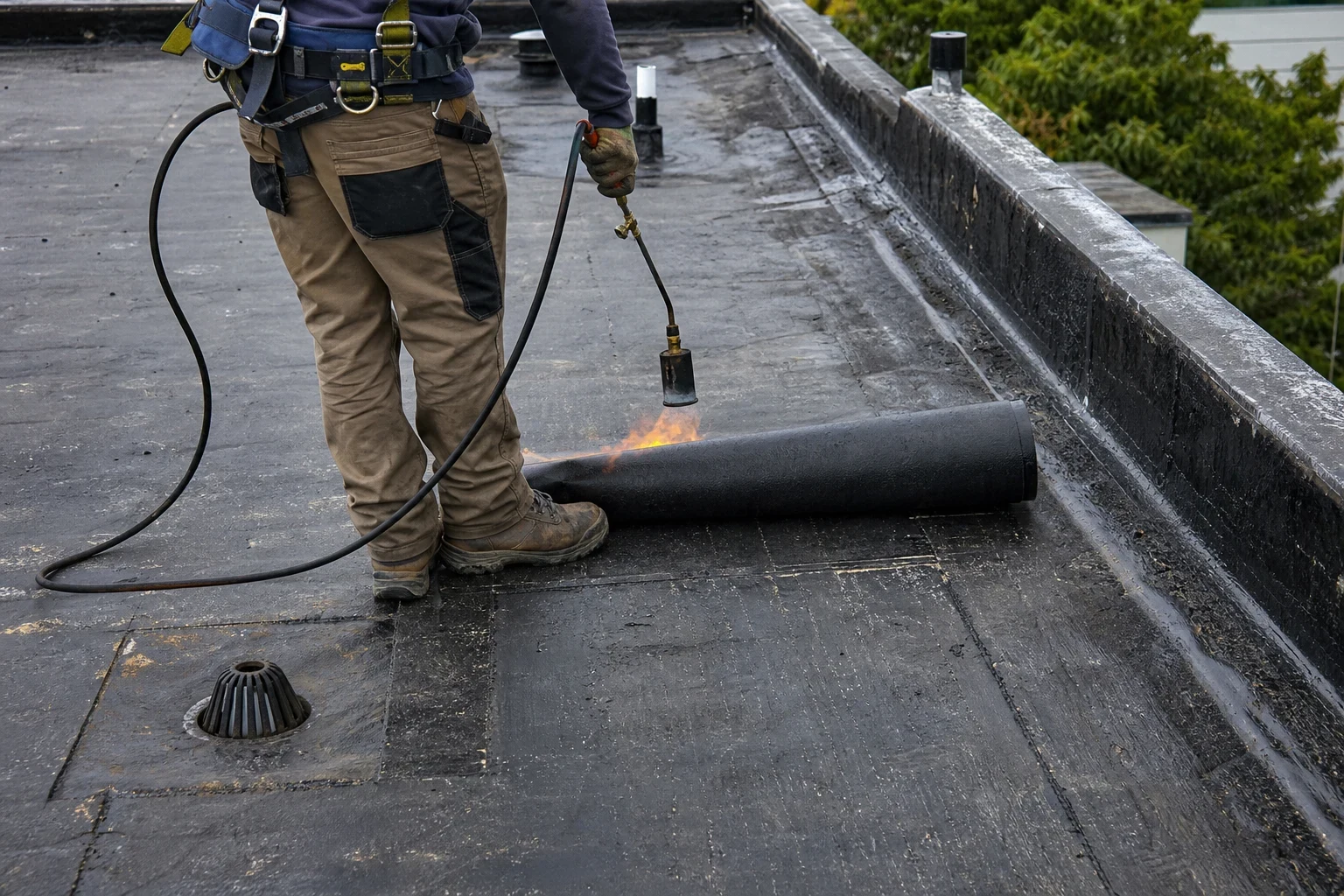
We repair, recoat and replace low-slope roofs on homes, additions, garages and patio covers. The same small crew measures your roof, tears off the old layers and seals the last seam, so the person who found the ponding is the person who fixes it.
What a flat roof needs to work, and when it fits
No flat roof is perfectly level. It needs a minimum of a quarter inch of drop per foot to send water to a drain or scupper, and the membrane must stay unbroken with no laps exposed. Most low-slope problems we find trace back to one of those failing: a sagging joist that created a low area, or a seam that opened at a parapet or around a vent stack.
We use the systems that make sense on a home: single-ply TPO, two-ply modified bitumen, and reflective coatings on existing roofs that are still in good condition. Coastal salt air and constant sun dry out older asphalt surfaces and rust metal edge flashing, so we focus hardest on edges, drains and roof openings.
Roofing Seal Beach holds a roofing contractor license, CSLB 1092407 (C-39), and is insured for the work we do at your home. With a small team, the same people handle everything from the first moisture check to the last cleanup.
What our flat roofing work includes
Seam and blister repair
We open failed laps, clean them back to sound membrane and re-weld or re-torch them. Blisters are cut out and patched with matching material, not smeared over with mastic that cracks within a season.
Drainage correction
Water that sits for more than two days after rain shortens the life of any membrane. We add tapered insulation, crickets or a larger scupper so water leaves the roof instead of resting on it.
Full tear-off and replacement
We strip the old layers down to the deck, replace soft or delaminated plywood, then install new insulation board and membrane. If your house also has sloped sections, we can handle asphalt shingle roofing or tile roofing on the same project.
Flashing and edge metal
Parapet walls, wall-to-roof transitions, curbs for skylights and HVAC units, and drip edge are where flat roofs leak first. We replace rusted metal and tie every penetration into the new membrane.
Reflective coatings
When the membrane is still bonded and dry underneath, an elastomeric or silicone coating can add years and cut heat gain in the rooms below. We check for trapped moisture first, because coating over wet insulation seals the problem in.
Manufacturer coverage
When your project uses a qualifying CertainTeed roofing system, CertainTeed SureStart PLUS 3-Star manufacturer coverage is available. Your estimate will note which parts of the roof qualify.
Signs your flat roof needs attention
Water still standing days after rain
Ponding means the slope or the drains are not doing their job. Standing water breaks down asphalt surfaces and adds weight to the framing.
Blisters, ridges or alligatoring
Bubbles mean moisture or air is trapped between plies. A cracked, scaly surface means the asphalt has dried out and lost its flexibility.
Seams lifting at the edges
Laps that curl up at parapets, curbs or the roof perimeter let wind-driven rain run straight under the membrane.
Ceiling stains in the room below
Water on a flat roof can travel along the deck before it drips, so the stain is often several feet from the actual opening.
Soft or spongy spots underfoot
A deck that gives when you step on it usually means wet insulation or rotted plywood that a surface patch will not fix.
How a flat roof job runs
- 1
Inspection and moisture check
We walk the roof, probe suspect areas, check drains and scuppers, and photograph what we find. You see the photos before we talk about price.
- 2
Written estimate with options
You get a free written estimate that lays out repair, coating or replacement where each one makes sense, with the reasons for our recommendation.
- 3
Permit and preparation
For a reroof we pull the permit with the city. On work day we cover plants, protect walkways and stage materials so your driveway stays usable.
- 4
Tear-off, deck repair and install
We remove only what we can dry in that day, replace damaged decking, set insulation and lay the membrane, flashing every curb and pipe as we go.
- 5
Water test and walk-through
We run water to the drains to confirm the roof empties, sweep for nails and debris, and walk you through the finished roof.
What sets the cost of a flat roof
Our flat roof prices come from measuring the roof and seeing what lies beneath the surface, not from a phone guess. Each item gets its own line on your written estimate so you can follow where your money goes. Financing through Service Finance Company is available, subject to credit approval.
- Roof size and existing layers
- A bigger roof takes more material, and each old layer we remove adds labor and disposal cost.
- State of the deck and insulation
- Soaked insulation and rotted plywood must be removed. We only know the full amount after the old roof is opened, and you see it before we replace anything.
- Which system you choose
- Coating a sound roof, installing two-ply modified bitumen and putting down mechanically fastened TPO all differ in material and labor cost.
- Drainage work and roof openings
- Tapered insulation, added scuppers and each vent, skylight or HVAC curb take extra time and flashing material.
- Reaching the roof and energy rules
- Narrow side yards or a second-story roof make the work slower. California's Title 24 energy code may also call for a cool-rated surface on a low-slope reroof, which affects the materials.
Flat roof questions we get
Something not covered here? (562) 373-6719
TPO or modified bitumen: which one fits my roof?
TPO is one white sheet with seams welded by heat, and because it reflects sun it passes cool roof rules easily. Modified bitumen is a heavier asphalt system built in layers that stands up to foot traffic and takes detailed flashing well. Which one we suggest comes down to how the roof gets used and what surrounds it.
Can I coat my flat roof instead of replacing it?
In some cases. A coating works when the current membrane is still stuck down and the insulation beneath it is dry. If blisters run across the roof or the deck is soft underfoot, a coating just covers the problem, and we will say so directly.
Will my house sit open while you work?
No. We remove only as much as we can dry in by the end of the day, and most single-story flat roofs are done in one to a few working days. We keep an eye on the forecast and do not open a roof with rain coming.
Does homeowners insurance cover a flat roof?
That depends on your policy and what caused the damage. Sudden events like wind or a falling branch are often covered, while gradual wear usually is not. We work directly with your insurance claim with photos and measurements, and the adjuster decides coverage.
Have the same crew look at your flat roof
We will check the drainage, seams and deck, show you photos of what we found and put the options in writing. The inspection and the estimate cost you nothing.