ServicesRoof Inspections
Roof Inspections in Seal Beach
We check your roof from ridge to gutter line: the covering, the flashing, every penetration, the ventilation and the attic underneath. You get photos of what we found, a plain explanation of what each problem means, and a written estimate only if something needs work.
How We Check a Roof From Top to Bottom
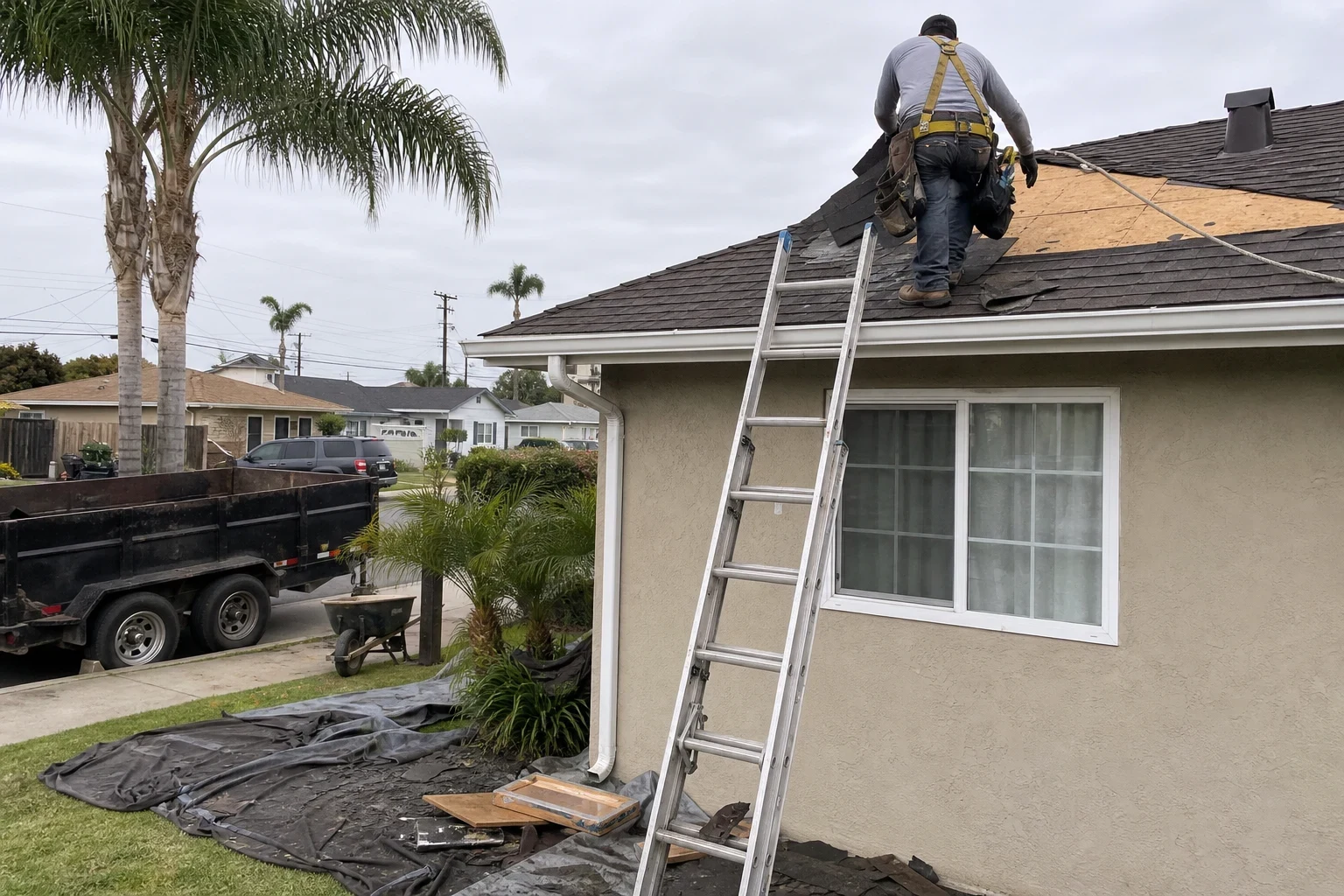
We look at every reachable part of the roof without taking anything apart. We walk the main surface, check the metal at walls, chimneys and vents, feel underfoot for soft decking, and view the underside of the sheathing from the attic. At the end you know if the roof is in good shape, needs one specific fix, or is nearing the end of its life.
An inspection makes sense before buying or selling a house, after a rainy winter, when the roof is older than 15 years, or when a ceiling stain shows up and you want the cause found before you pay for a repair. We serve homes in Seal Beach, Rossmoor, Los Alamitos and nearby.
With a small team, the roofer who climbs up is the one who goes over the photos with you and, if you hire us, stays through the work. We hold a roofing contractor license, CSLB 1092407 (C-39), and carry insurance, so a licensed, insured roofer does the inspection rather than a salesperson.
Our inspection checklist
- 01
Shingles or tile
On asphalt shingles we check for lost granules, cracked or raised tabs and nails working up. On tile we look for broken, shifted or missing pieces and inspect the underlayment wherever it is visible. Tile turns away most water, but the felt underneath is the real waterproofing and often fails first.
- 02
Metal and roof openings
Most leaks begin at step flashing, counterflashing, pipe boots and vent flanges. Coastal salt air rusts galvanized metal and fasteners sooner than it does inland, so we inspect each metal piece and photograph any rust or cracked rubber.
- 03
Sheathing seen from the attic
Inside the attic we check for light coming through, water marks on the sheathing, dark rings at nail points and wet or flattened insulation. That view backs up or rules out what we noticed on the roof.
- 04
Attic airflow
We compare intake at the eaves with exhaust at the ridge or roof vents. Weak airflow cooks shingles from below in summer and holds moisture in during winter.
- 05
Gutters and flat areas
Plugged or poorly sloped gutters send water back under the drip edge and rot the fascia. Low-slope areas over patios and additions are checked for standing water, blistered membrane and opened seams.
Questions about Roof Inspections?
Call(562) 373-6719When it makes sense to have the roof checked
A mark on the ceiling
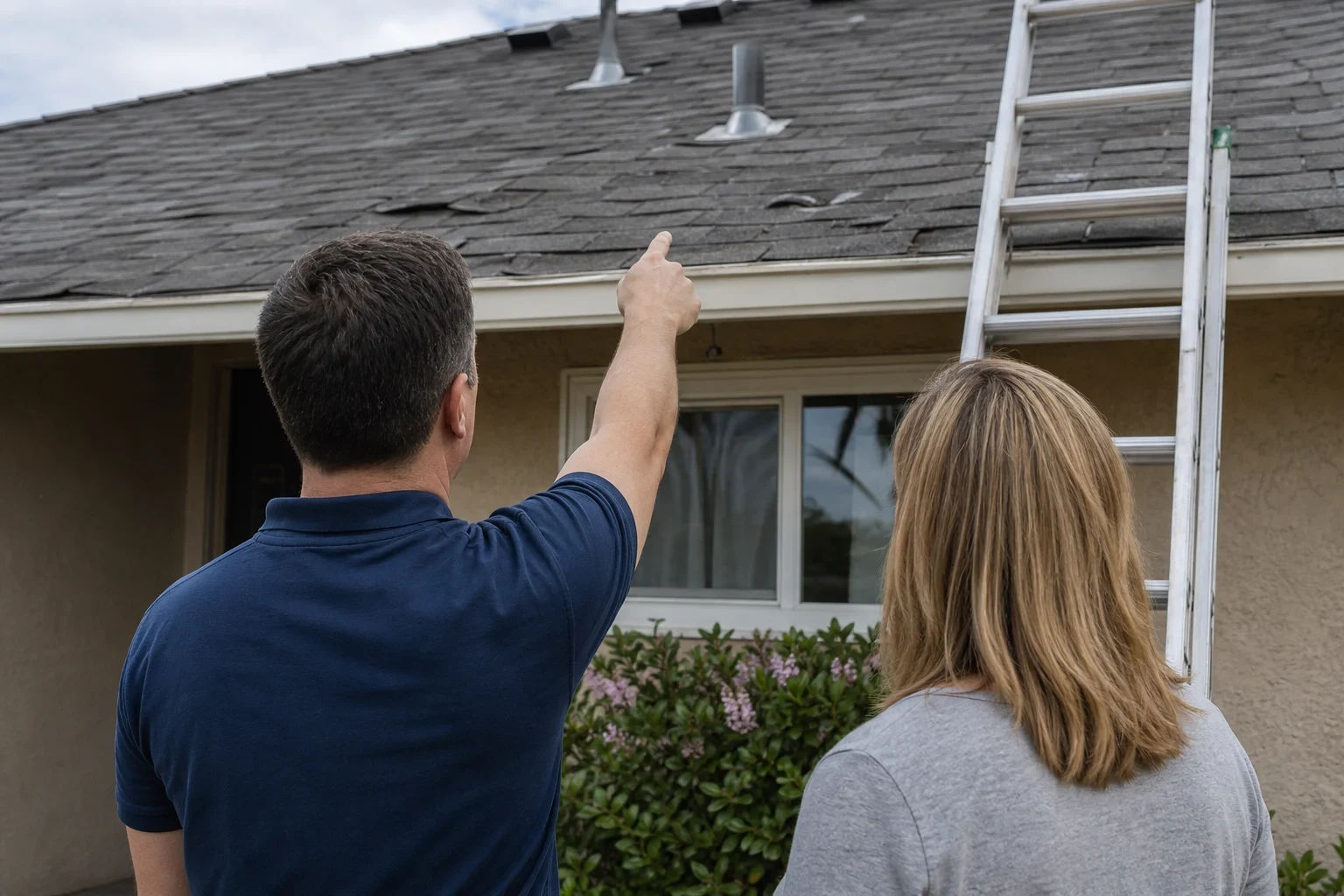
A brown ring or blistered paint shows water got through at some point. The wet area seldom lines up with the entry spot, so it has to be traced.
Grit collecting in gutters
Sandy granules at the downspouts mean shingles are losing their protective surface and wearing out faster.
Rusty vents or flashing
Rust stains on stucco or orange flakes near roof jacks show the metal is getting thin. Holes come next.
Raised tabs after a windstorm
Santa Ana gusts can break a shingle's seal strip without blowing it off. From the street it looks normal, but wind-driven rain gets under it.
A roof older than 15 years
Even without obvious problems, an aging roof deserves a baseline look so you can plan ahead rather than scramble.
Buying or selling a house
Escrow runs more smoothly when the roof's condition is on record from the start. Both sides can account for repairs early rather than fight over them in the last week.
What Happens on Inspection Day
- 1
A quick phone call
Let us know what you have seen, roughly how old the roof is and any earlier repairs. We pick a time and tell you who will show up.
- 2
Up top
Ladders go on solid ground, and we step only where the roofing can hold us. On tile we keep to the overlaps to avoid breakage. We photograph each problem we find.
- 3
Under the roof
From the attic we look at the sheathing, insulation and vents. This is often how we tell an old dried stain from a leak that is still active.
- 4
What we found, explained simply
We go over the photos with you and sort urgent items from ones that can wait. When work is needed, you receive a free written estimate itemized line by line. When nothing is needed, we say so.
What moves the cost of work an inspection finds
The inspection itself costs you nothing. What changes the price is the work it may uncover, and we explain each factor on the estimate before you decide anything.
- Roof material
- Replacing underlayment under tile means lifting and resetting the tile, which takes more labor than a comparable shingle repair. Flat roofing has its own membrane costs.
- What is under the surface
- Rotted decking or failed underlayment adds material and time. We show you photos of it so the line item makes sense.
- Pitch and height
- Steep slopes and two-story edges need more safety setup before anyone works, such as fall-protection anchors and toe boards. Each move on that kind of roof also goes slower. The added time appears on the estimate as its own labor line.
- Permits
- A full reroof usually needs a city permit and a final inspection. Most small repairs do not. We pull the permit when one is required and list it on the estimate.
What People Ask About Inspections
What does the inspection cost?
Nothing. Both the inspection and any written estimate for needed work are free. You are not obligated to hire us, and the findings are yours to keep.
How much time should I set aside?
A single-story shingle roof usually takes about an hour. Tile, a steep pitch or a tight attic take longer since we go slower. We can give you an estimate of the time when you call.
Will you try to sell me a new roof?
No. Many roofs we check need one focused repair or nothing at all. If replacing is truly the smarter spend, the photos of the decking, underlayment and flashing show why, and the decision stays with you.
Can your report support an insurance claim?
It gives you a dated record with photos of where the damage is and how it looks. We work directly with your insurance claim and can be on the roof during the adjuster's visit, though the adjuster decides coverage. See our Storm Damage Repair page for the steps.
If I need a new roof, what coverage comes with it?
Qualifying roof replacements can carry CertainTeed SureStart PLUS 3-Star manufacturer coverage. Financing through Service Finance Company is available, subject to credit approval.
Find out what your roof actually needs
One call sets up a free roof inspection with photos and a straight answer. If the job goes further, the person you meet on inspection day stays with it.