ServicesUrgent Roof Repair
Urgent Roof Repair in Seal Beach
When wind lifts tiles, a branch punches through or a winter storm finds a weak seam, we secure the opening first, then come back and repair the real cause. The same small crew handles both visits, so nothing gets lost between the tarp and the fix.
Two Jobs: Stop the Water, Then Fix the Roof
Sudden roof damage is really two problems. The first is keeping water out of your home today. The second is a repair that holds through the next rainy season. A tarp alone does not solve the second problem, and a rushed shingle patch over wet decking does not solve either one.
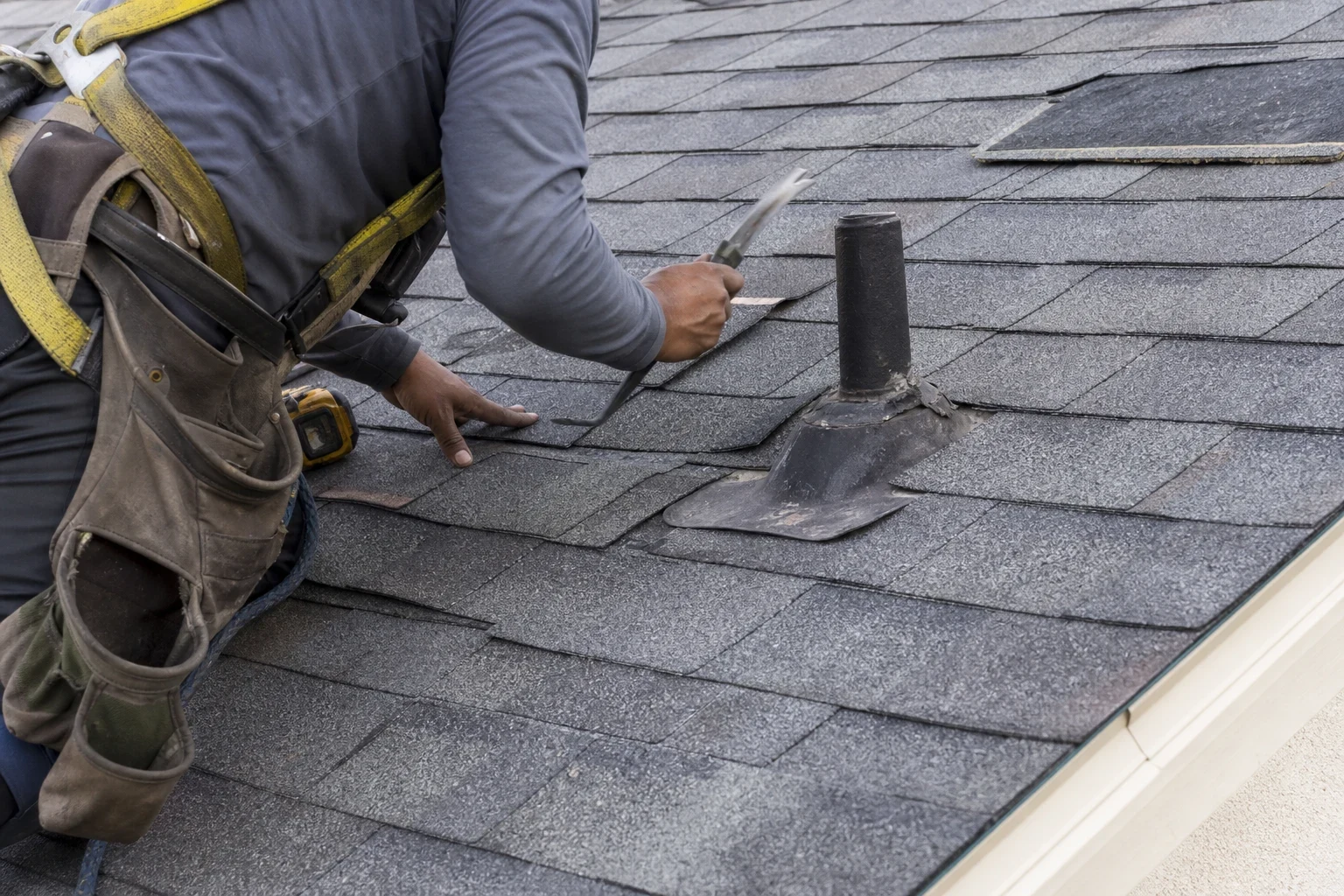
We start by drying the roof in: a reinforced tarp or a sheet of underlayment fastened over the opening, sealed so wind cannot get underneath it and peel it back. Once the area has dried, we open it up, check the plywood or skip sheathing underneath and repair it with matching material. Because our team is small, the people who put the tarp on are the people who take it off and finish the work.
We are a licensed roofing contractor, CSLB 1092407 (C-39), and we are insured. That matters most on a job like this, where someone is working on a damaged roof that may not be fully sound underfoot.
What the Work Includes
- Temporary dry-in
- We cover the opening with a heavy tarp or synthetic underlayment, fastened through wood battens rather than loose nails. Battens spread the load so the tarp does not tear at the fastener holes when wind gusts.
- Interior water check
- We look at the attic side for wet insulation, stained rafters and water pooling on the ceiling drywall. Wet insulation loses its value and can hold moisture against the framing, so we tell you what should come out.
- Decking and framing repair
- Soaked or broken sheathing gets cut back to solid wood and replaced. If a rafter is cracked from an impact, we show you before we touch it.
- Matched roofing material
- We repair with the same type of material already on your home, whether that is concrete or clay tile, asphalt shingle or a low-slope membrane. On tile roofs we replace the underlayment under the repaired section, since that layer is what actually keeps the water out.
- Photos and a written scope
- You get photos of the damage before and after we secure it, plus a written estimate for the permanent repair. Those same photos help if you file a claim, and we work directly with your insurance claim.
Signs Your Roof Needs Attention Right Away
Water coming through the ceiling
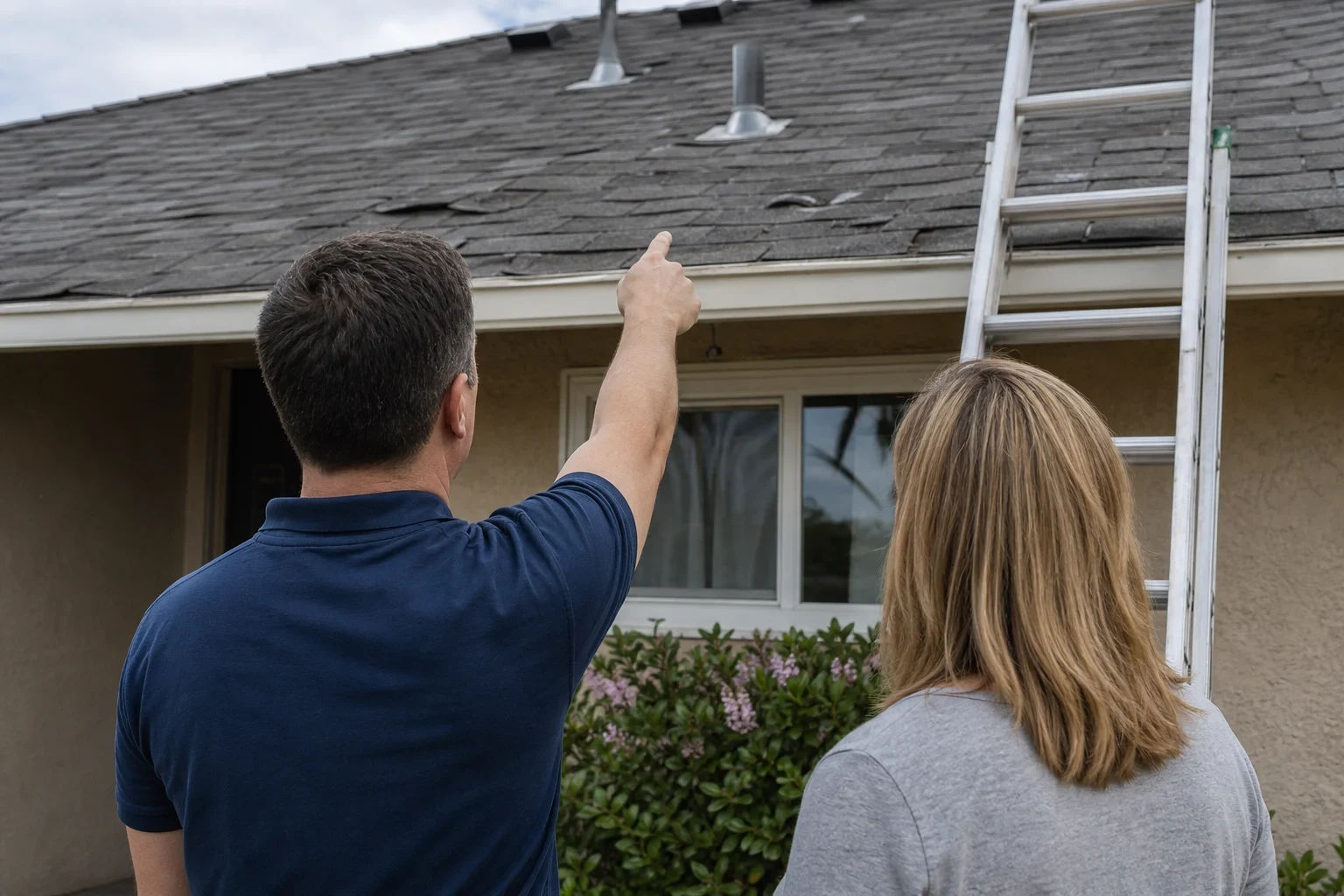
Active dripping, a sagging spot in the drywall or water running down a wall means the roof has already been breached. Put a bucket under it, keep people away from a bulging ceiling and get the roof covered.
Missing or broken tiles after wind
Strong Santa Ana gusts can lift ridge tiles and slip loose field tiles out of place. A gap in a tile roof exposes the underlayment, which breaks down quickly in sun and fails in the next rain.
Impact from a fallen limb
A branch can crack tiles, split shingles or puncture the decking in one hit. Even if nothing leaks yet, broken sheathing will let water in at the first storm.
Flashing torn loose
Metal flashing at chimneys, walls and vents can bend back in high wind. Old fasteners that have corroded over the years give way first, so a single gust finishes what time started.
Shingles flapping or creased
A shingle that has been lifted and folded back has lost its seal strip. It may look fine from the street, but it will let wind-driven rain under the course above it.
What Moves the Cost
There are two separate costs here: the temporary protection and the permanent repair. We price them separately in writing so you can see what each one covers. Financing is available through Service Finance Company, subject to credit approval.
Size of the opening
A few slipped tiles take far less material and time than a section crushed by a limb. Larger openings need more battens, more sheathing and more replacement roofing.
Damage below the surface
Wet or broken decking, soaked insulation or a cracked rafter add to the scope. We cannot price these until the area is opened, which is why the estimate comes after the dry-in.
Roof material
Matching an older clay or concrete tile profile can take sourcing. Asphalt shingles and low-slope membranes are usually easier to match.
Pitch and access
A steep slope, a second-story eave or a narrow path along the house means extra ladder work, roof anchors and harness time. That labor shows up in the price.
Insurance involvement
If you file a claim, your policy and adjuster decide what is covered. We document the damage and work with the claim, but we do not act as your adjuster.
How a Repair Like This Runs
- 1
Your call
Tell us what happened and where water is showing up. We ask about roof type and access so we arrive with the right tarp, battens and replacement material.
- 2
Securing the roof
We inspect the damaged area, photograph it and dry it in. Before we leave, you know what we covered, what we saw underneath and what still needs to happen.
- 3
Written estimate
Once we can see the full extent, you get a free written estimate for the permanent repair. If what we find suggests the whole roof is worn out, we tell you directly and lay out roof replacement next to the repair, with the reasons behind each.
- 4
Permanent repair
The same crew returns, removes the temporary cover, replaces damaged decking and underlayment, and installs matching roofing. We clean up broken tile, nails and debris from your yard and driveway.
- 5
Final walk-through
We show you the finished area and the photos from each stage, and leave you with notes for your records or your insurer.
Questions About Urgent Roof Repairs
Should I go up on the roof myself to put a tarp on?
We recommend against it. A damaged roof can have soft decking or loose tiles that slide underfoot, and wet tile is slick. Move belongings away from the leak, catch the water and leave the roof to a crew with fall protection.
How long can a tarp stay on?
A properly battened tarp can hold for weeks, but sun breaks down the material and wind works at the edges over time. It is a stopgap, so we schedule the permanent repair as soon as the area is dry and any claim details are settled.
Does homeowners insurance cover sudden roof damage?
That comes down to your policy and what caused the damage. Insurers often treat a sudden event, like wind or a falling tree, differently than gradual wear. We supply photos and a written scope and work directly with your insurance claim. The coverage decision belongs to your adjuster.
What if the damage means I need a new roof?
Sometimes a storm exposes underlayment or decking that was already failing across the whole roof. If that is the case, we show you the evidence and price both options. On a full replacement, CertainTeed SureStart PLUS 3-Star manufacturer coverage is available.
Do you serve areas outside Seal Beach?
Yes. We also work in Long Beach, Huntington Beach, Los Alamitos, Rossmoor and the other towns listed on our Service Areas page. We offer service in English and Spanish.
Get the Damage Covered and Looked At
Tell us what happened to your roof and we will set up a free inspection, secure the opening and give you a written plan for the permanent repair.