ServicesStorm Damage Repair
Storm Damage Repair in Seal Beach
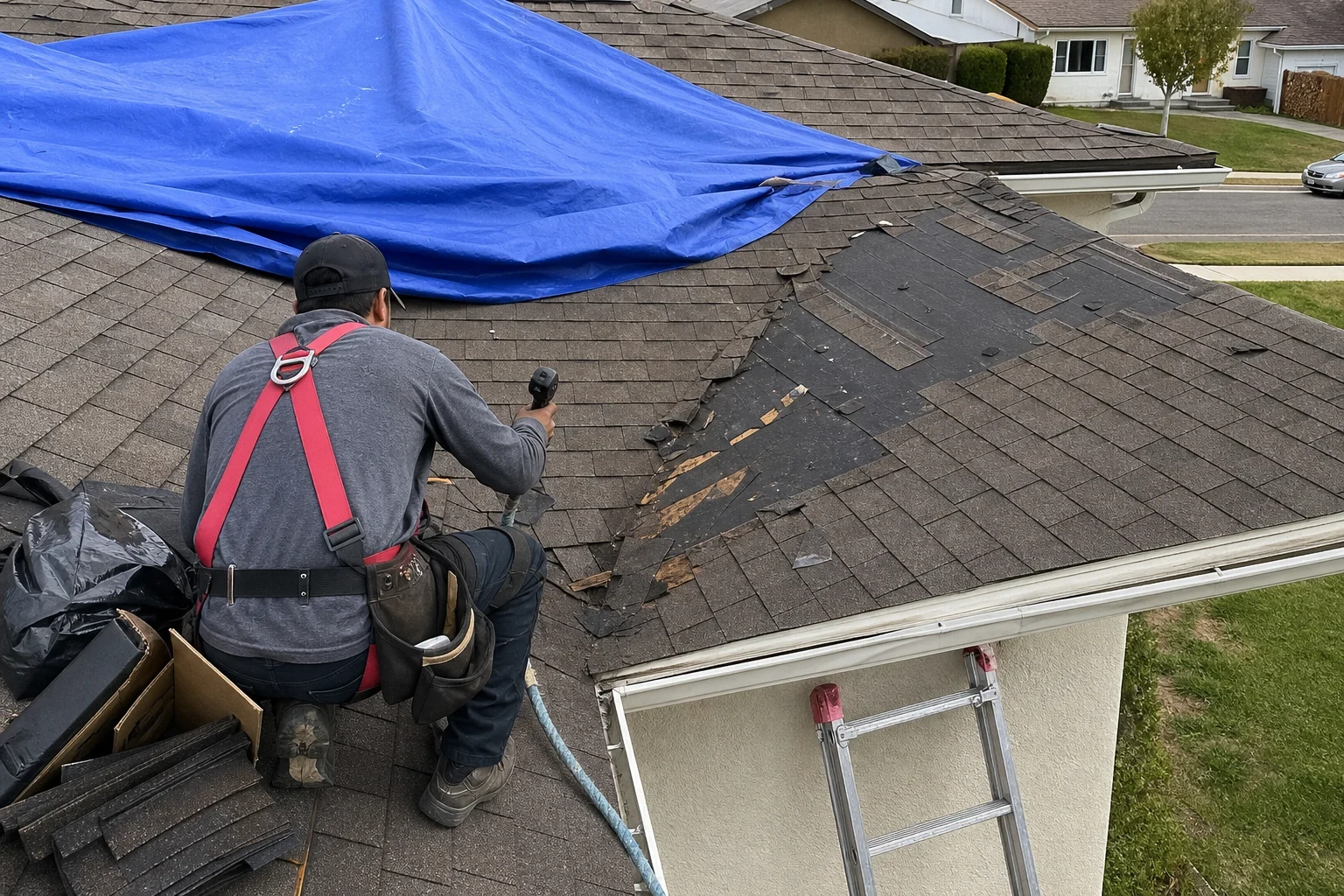
After a hard wind or a winter storm, we check your roof for lifted shingles, slipped or cracked tile and loosened flashing. You get photos of what we found, a written scope, and the same small crew from the first climb to the final sweep.
What Storm Damage Repair Covers
Most storm damage on a roof is quiet. A gust gets under a shingle tab, breaks the adhesive seal strip and folds the tab back, creasing it at the nail line. The shingle drops back into place and looks fine from the street, but it no longer sheds water, and the next wind-driven rain pushes moisture under the lap. On tile roofs, uplift and flying debris crack pieces or knock them out of their courses, leaving the underlayment open to sun and rain.
Storm damage repair means finding those weak points and putting the roof back to a watertight, code-compliant state before small openings become ceiling stains. Sometimes that is a dozen shingles and a length of ridge cap. Sometimes the decking underneath has taken water and the honest answer is a larger section or a full roof replacement. We tell you which, and why.
Our crew is small on purpose. Whoever climbs up to inspect and photograph your roof comes back to make the repair, so the damage you talked through on the first visit is exactly the damage that gets fixed.
What the Work Includes
A full-roof damage check
We walk every slope, not just the one with the obvious problem. We lift tabs to test seal strips, check tile for cracks and slipped courses, and look at ridge, hip and rake edges where wind pressure is highest.
Photos and a line-item scope
You get dated photos of each damaged area and a free written estimate that lists every repair separately. It is the same record you can hand to your insurance company.
Shingle and tile replacement
Creased or missing shingles are replaced and hand-sealed. Broken tile is swapped out, and slipped pieces are reset with new fasteners or clips so they hold in the next blow.
Flashing and penetration repair
Wind loosens step flashing along walls, counterflashing at chimneys and the boots around vent pipes. We refasten or replace them, because these joints are where storm water usually gets inside first.
Decking and underlayment repair
If water has reached the plywood or the underlayment has torn, we open the area, replace soft decking and re-lay the underlayment before new roofing goes on.
Gutter and edge work
Storms pull gutters away from fascia and bend drip edge. We reattach or replace what was damaged so water leaves the roof the way it should.
Signs Your Roof Took Storm Damage
Shingle pieces in the yard
Granule-covered strips or whole tabs on the ground mean something came off. Missing pieces leave bare mat or nail heads exposed to rain.
Tabs that lift or look wavy
A shingle that flutters in a breeze or sits slightly raised has lost its seal. It may already be creased.
Cracked, shifted or missing tile
Look for gaps in the rows or tile sitting out of line with its neighbors. One broken tile can let water run straight onto the underlayment.
New stains or a damp attic
Water spots on ceilings, wet insulation or daylight through roof boards after a storm point to an opening. Our roof leak repair page explains how we trace the path.
Bent flashing or loose vents
Metal that has peeled back at a wall, chimney or skylight, or a vent cap that has shifted, needs attention before the next rain.
Limbs or fronds on the roof
Even a light branch can puncture a shingle or crack tile on impact. Debris that sits there also dams water against the roof.
How a Storm Repair Job Runs
- 1
Inspection by phone appointment
You call, we set a time, and one of our crew comes out to inspect the roof and attic. If an opening needs protection right away, we can tarp it so rain stays out while the plan comes together.
- 2
Photos, scope and an honest answer
We show you the photos and walk you through a written estimate. If repair will hold, we say so. If the damage or the age of the roof makes replacement the better call, we explain the reasons.
- 3
Insurance coordination
We work directly with your insurance claim, sharing our photos and scope and meeting the adjuster on the roof if you want us there. The adjuster decides coverage; we make sure the damage is clearly documented.
- 4
Repair day with the same crew
The people you met do the work. We protect plants and walkways, remove damaged material, repair decking if needed and install matching shingle or tile.
- 5
Cleanup and final walk
A rolling magnet goes over the lawn, beds and driveway to pick up stray fasteners, and the torn-off material leaves in our truck. Then we go over the before and after pictures with you so you can see what changed.
Why Storm Repair Prices Vary
One gust can leave a roof with three loose tabs and the roof across the street with torn flashing and wet plywood. Your price depends on how much was damaged, the material it is made of and the condition of the layers under it once the top layer comes off. Each item appears on its own line in your written estimate, and financing is available through Service Finance Company, subject to credit approval.
- Extent of the damage
- A few creased tabs on one slope is a short job. Damage spread across several slopes, ridges and flashing takes more material and more hours.
- Roofing material and matching
- Asphalt shingles are quicker to replace than tile. Older tile profiles and discontinued shingle colors can take time to source so the repair blends in.
- Condition of the decking
- If water has soaked the plywood, it has to be cut out and replaced before new roofing goes down. We cannot know this for certain until the damaged layer is opened.
- Pitch, height and access
- Steep slopes and two-story eaves need more safety setup and slow the work.
- Repair versus partial replacement
- When damage is wide enough that a section must be rebuilt, permit requirements and added materials change the scope.
Storm Damage Repair Questions
Something not covered here? (562) 373-6719
Will my insurance cover storm damage to my roof?
It depends on your policy and on whether the damage came from the storm or from age and wear. We document what we find with photos and a line-item scope and work directly with your claim. The adjuster makes the coverage decision, and we answer their questions about the roof.
Should I file a claim before or after you inspect?
Many homeowners have us inspect first so they know whether the damage is real and how large it is. Our inspection is free, and the photos give you something solid to bring to your insurer. Some policies set time limits for reporting, so check yours.
Can you match the shingles or tile already on my roof?
Usually, yes. We bring samples and look for the same profile and color. When an exact match is no longer made, we explain the closest options before any work begins.
Are you licensed and insured for this work?
Yes. We are a licensed roofing contractor, CSLB 1092407 (C-39), and we are insured for the storm repairs we take on.
What if the storm damage means I need a new roof?
We tell you plainly and show you why, whether that is widespread seal failure or soft decking. If you replace, CertainTeed SureStart PLUS 3-Star manufacturer coverage is available on the new roof. Our roof replacement page covers how that job runs.
Is storm damage the same as hail damage?
Hail leaves its own marks, like bruised shingles and dented metal, and we cover that on our hail damage repair page. Wind, rain and falling debris cause most of the storm damage we see. We check for all of it on one visit, and we offer service in English and Spanish.
Get Your Roof Checked After the Storm
One of our small crew will inspect the roof, photograph what the wind did and give you a written repair scope at no charge. The same people will be back to do the work.